Research
Peer-Reviewed Publications
- “Measuring Beachgoer Preferences for Avoiding Harmful Algal Blooms and Bacterial Warnings.” 2023. Ecological Economics, vol. 204(A). With Frank Lupi, Brent Sohngen, and Alan Xu. https://doi.org/10.1016/j.ecolecon.2022.107653
Research in Progess
- Climate Migration and Liquidity Constraints: Evidence from the Alaska Permanent Fund Dividend (Job Market Paper)
with Matt Reimer
Conferences: AAEA 2026, AERE@WEAI 2026, Giannini Student Conference 2026
Funding: North Pacific Research Board - Resource Extraction, Electrification, and Rural Development in the American West
with Katrina Jessoe and Jeff Hadachek
Conferences: AAEA 2026, AERE 2025
Funding: Giannini Foundation of Agricultural Economics - The Price of Fear: Salience and Price Sensitivity in Natural Disaster Insurance
Conferences: Giannini Student Conference 2025
Funding: UC Davis Institute of the Environment - Permit Migration and the Changing Geography of Fishing-Dependent Communities with Tsugumi Yamashita, Matt Reimer, and Jim Sanchirico
Other writing
- MS Thesis, 2021: Economic Damages of Water Quality Warnings at Great Lakes Beaches
- Outstanding M.S. Thesis Award, Northeastern Agricultural & Resource Economics Association (NAREA)
- Outstanding M.S. Thesis Award, Michigan State University AFRE
- “Impacts of Climate Change on Human Health,” Published in Climate Change and National Security: Can Public Policy Change the World? (The Aspen Institute and the University of Chicago). 2019. With Dean Arnold, Matthew Burnett, Kathleen Kirsch, and Charlotte Hough.
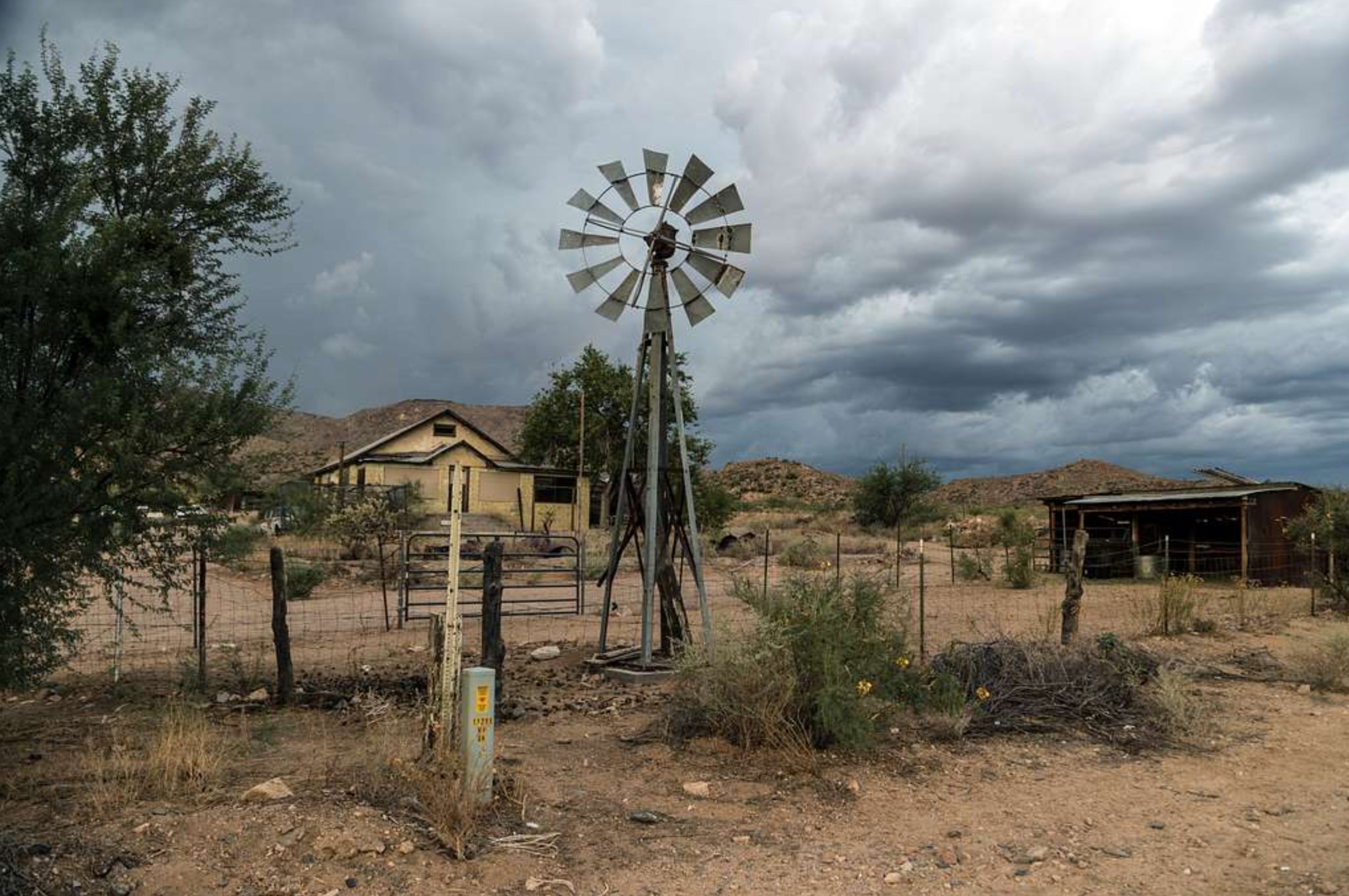 Old ranch house and windmill along Route 66 in northern Arizona, by Carol Highsmith (2018)
In joint work with Katrina Jessoe and Jeff Hadachek, I examine how reliance on the windmills for groundwater pumping led to a technological “lock-in” effect, which fundamentally dictated which areas benefitted most from the New Deal-era rural electrification of the United States.